Insights · Luzon
Who Are the Agta? The People Who Were Here First
You can name pre-colonial Filipinos. Rajah Sulayman of Maynila. Lapulapu of Mactan. Datu Zula. Sixteenth-century Spanish accounts are full of names, titles, alliances and grudges, and William Henry Scott built an entire book out of them.
Now try to name one Agta from the same period.
You cannot. Nobody can. And the reason why turns out to be more interesting than the gap suggests.
They were here before the question made sense
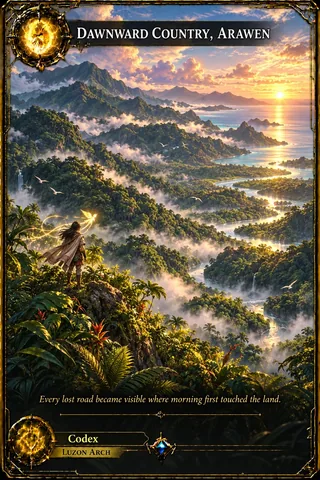
The ancestors of the Agta, and of every Philippine Negrito group, are generally taken to be the archipelago's aboriginal population, present tens of thousands of years before the Austronesian migrations that brought the languages most Filipinos speak today.
Put that next to the usual timeline. "Pre-colonial" in Philippine history usually means the few centuries before 1521 - barangays, datus, trade with China, the spread of Islam through the south. The Agta were already ancient when all of that started. The arrival of the Austronesian farming peoples, which is the beginning of the story for most of the country, is a late event in theirs.
That does something uncomfortable to the word "pre-colonial." It is a boundary drawn around a Spanish arrival, and it is not the boundary that matters most to the people who were here first.
Where they actually are
The Agta live along the Sierra Madre, the mountain range running down the eastern side of Luzon - Aurora, Isabela, Cagayan. It is the wet side, the side that takes the typhoons first, and it held some of the last large stands of primary rainforest in the country.
Thomas Headland, who spent four decades working with the Casiguran Agta in northern Aurora, put numbers on one community: about 700 square kilometres of territory, roughly half of it primary rainforest, and in 1983 a population of 616 people.
Six hundred and sixteen. That is the scale we are talking about. Across the whole archipelago, Negritos number around 15,000 people in about 25 distinct ethnolinguistic groups - which is the first thing most writing on the subject gets wrong. "Negrito" is not one people. It is a category outsiders drew around groups who share deep ancestry and share very little else: different languages, different territories, different neighbours, different histories.
The Aeta of Zambales in the west and the Agta of the Sierra Madre in the east are not the same people, and writing as though they are is the same error as treating Ilocano and Cebuano as dialects of one thing.
The relationship nobody puts in the myths
Here is the part I find most interesting, and it is history rather than folklore.
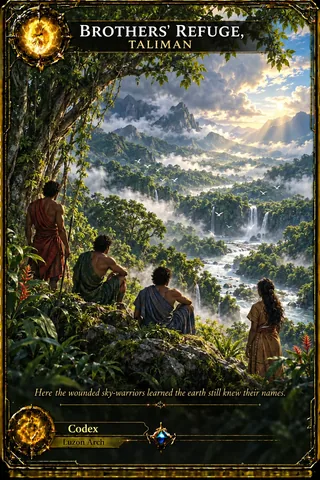
The Agta were never sealed off in the forest. For a very long time they have been in a trading relationship with lowland farming peoples - and Headland is specific about the shape of it: "The main feature of this exchange was the trade of wild meat for starch foods."
Wild pig and deer, taken in the mountains, moving downhill. Rice and root crops moving up.
This is not a footnote. It is an economy, and it is old, and it makes the popular image wrong in a specific way. The Agta were not isolated primitives who happened to be found in a forest. They were one half of a working exchange with the farming lowlands - the half that could take large game out of terrain nobody else could work.
The accomplishment that rewrote a textbook
You asked for famous Agta and what they achieved. The honest answer is that the achievement is collective and it is enormous, and it landed in a place nobody expected: the anthropology of the whole human past.
For most of the twentieth century the standard model of forager societies was "Man the Hunter" - men hunt, women gather, and this division was assumed to run back into prehistory as something close to a human constant.
Then Agnes Estioko-Griffin and P. Bion Griffin worked in Agta bands north of Casiguran and documented women hunting pig and deer with bow and arrow. They published it as "Woman the Hunter: The Agta" in the 1981 Yale University Press collection Woman the Gatherer, and followed it with work on what women hunters imply for reading the Pleistocene.
It is worth stating precisely, because precision is the whole point: the finding was about particular bands in a particular area, not a claim that all Agta women hunted everywhere. That is exactly how the Griffins framed it. The loose version - "Filipino tribe where women are the hunters" - is the version that travels, and it is not quite what the research says.
What it did say was enough. A model built on the assumption that a sexual division of labour in foraging was near-universal had a documented, living counter-example in the Sierra Madre. Any serious discussion of gender and foraging since has had to go through the Agta.
No individual name is attached to that. It belongs to a community that mostly did not know it was being used to argue with a textbook.
What the record lost, and why
So why no names?
Because the record was not theirs. Agta society was mobile and non-literate, which means its own history was carried in memory rather than paper. And the outsiders who did write - Spanish missionaries, colonial officials, later anthropologists - wrote about peoples, not persons. A datu had a name in the record because he signed treaties, held a port, or fought someone who wrote things down. A hunter in the Sierra Madre did none of those things.
The silence is not neutral and it is not evidence of absence. It is evidence about who was holding the pen.
This is also the honest answer to a question I get about the game: why is the Mindanao material so much easier to write about than the Luzon material? Because the Indarapatra and Sulayman cycle was written down - by Najeeb Saleeby, reprinted by Mabel Cook Cole in 1916 - and a great deal of Luzon's was not, or was written down under a different people's name, or was collected in ways that make attribution genuinely unclear.
I would rather say that plainly than paper over it.
What changed, and what is changing now
The trade that defined the relationship for centuries has largely gone.
By 1983 Headland recorded that hunting had fallen to 6 percent of adult male working days, and that the exchange had shifted: "instead of trading meat for rice, they now trade labour." Day wages, in his figures, of well under a dollar plus a midday meal. Rattan cut and sold. Most Agta by then involved in agriculture rather than foraging.
The forest went first and the economy followed it. This is not a story that ended in 1521, or in 1898, or in 1946. It is running now.
Where the game fits, and where it does not

Codex Legends is a card game built on Philippine history and folklore, and its Luzon deck is named for the Agta.
Two things about that, stated plainly.
The deck is named for them; the cards are not a record of them. The figures on the Luzon cards are the game's own interpretation. They should not be read as attested Agta deities, and I will not present them as such. Where a card does name a figure from a recorded tradition, the post about that figure will say which tradition and cite which source - the way the Indarapatra and Sulayman post does for Mindanao.
The deck's mechanics came from the history, and that part is real. The Luzon deck wins by filling its field and releasing a state called Bayanihan - the whole board acting together, no single card carrying it. That is not decoration chosen because the word sounds Filipino. A society of small mobile bands in difficult terrain, surviving thirty thousand years without centralised authority, is a genuinely different shape of power from a datu's barangay or a sultanate, and a deck that cannot win through one big unit is the closest a card game gets to saying so.
Mindanao's deck buries its own units for advantage. The Visayas deck stores and spends. Luzon holds the line together. Those are three different arguments about how strength works, and they came out of reading about three different societies.
Read further
The best accessible entry point to sixteenth-century Philippine society generally is William Henry Scott's Barangay: Sixteenth-Century Philippine Culture and Society, which is readable free on the Internet Archive. It is not about the Agta specifically, and Scott is careful about what his sources can and cannot support - which is the habit worth copying.
For the Agta in particular, Thomas Headland's four decades of work is the foundation, and his bibliography of the Agta Negritos of eastern Luzon is a free starting point that will take you further than any blog post.
Questions people ask about this story
- Who are the Agta?
- A Negrito people of the Sierra Madre on the eastern side of Luzon, concentrated in Aurora, Isabela and Cagayan. They are among the earliest inhabitants of the islands, and they are one of roughly 25 distinct Negrito ethnolinguistic groups in the Philippines, together numbering around 15,000 people.
- Are the Agta the same as the Aeta?
- Related but not the same. 'Negrito' covers about 25 groups across the archipelago who share deep ancestry but not one language or one culture. The Aeta of Zambales and Pampanga in western Luzon and the Agta of the Sierra Madre in the east are different peoples with different languages.
- Did Agta women really hunt?
- In some bands, yes, with bow and arrow, for pig and deer. Agnes Estioko-Griffin and P. Bion Griffin documented it north of Casiguran and published it in 'Woman the Gatherer' in 1981. It is worth being precise: the finding was about particular bands in a particular area, not a claim about every Agta community.
- Are there famous Agta from the pre-colonial period?
- No named ones. Agta society was mobile and did not write, and the outsiders who did write recorded peoples rather than persons. The absence is not evidence that nobody remarkable lived; it is evidence about who was holding the pen.
- Is the Agta deck in Codex Legends based on Agta mythology?
- The deck takes its name from the Agta and its setting from Luzon, but the figures on the cards are the game's own interpretation and should not be read as attested Agta deities. Where a card names a figure from a recorded tradition, the post about that figure says which tradition and which source.
Principal sources: Thomas N. Headland, 'Agta Negritos of the Philippines', Cultural Survival Quarterly; Agnes Estioko-Griffin and P. Bion Griffin, 'Woman the Hunter: The Agta', in Woman the Gatherer (Yale University Press, 1981); William Henry Scott, Barangay: Sixteenth-Century Philippine Culture and Society. Ethnography and history, not folklore. Read the source.